Hemangiosarcoma in dogs
Collapse, pale or white gums, or fast or hard breathing can mean internal bleeding. Go to an emergency vet now, even if your dog seems to recover. Call them on the way so they're ready.12
If your dog was just diagnosed, or your vet found a mass and you're waiting to hear more, start here.
I'm not a vet. I lost my dog Shelby to this cancer and gathered what veterinary schools and specialists say. Every fact links to its source. Talk to your vet about your dog. Last reviewed October 30, 2026.
What it is
Hemangiosarcoma is a cancer of the cells that line blood vessels. It is highly malignant, which means it grows and spreads fast. Because blood vessels run through the whole body, it can start almost anywhere. The spleen is the most common place. The heart, the liver, and the skin and muscle are also common.1
It tends to spread quickly, most often to the lungs and to other organs in the belly, like the liver. By the time it's found, it has often already spread in amounts too small to see on x-rays or ultrasound.1
Tumors in the spleen and heart can break open and bleed. For some dogs, a sudden collapse from that bleeding is the first sign anything is wrong. When it starts inside the body, there is no cure yet. Surgery and chemotherapy can slow it down.1
Who gets it
Mostly older, large-breed dogs. Veterinary surgeons say it is usually seen in dogs 8 to 10 years old.2 Cornell names German Shepherds, Golden Retrievers, and Labrador Retrievers.1 The surgeons add Poodles.2 It can happen in young dogs, but rarely.1
Genetics likely play a part, since some breeds get it more than others. Sunlight may play a role in the skin form, but not in the form that grows inside the body.1
Morris Animal Foundation's Golden Retriever Lifetime Study follows a large group of Goldens through their whole lives. As of 2022, hemangiosarcoma accounted for about 70 percent of the cancer deaths in the study.3
The signs
Early on, there may be no signs at all, or only mild ones that are easy to miss.12
Quiet signs
- Tiredness or weakness
- Less interest in exercise or play
- Eating less
- Weight loss
- A belly that looks bigger
Call your vet soon about any of these, especially in an older large-breed dog. If one comes with weakness, pale gums, or fast breathing, treat it as an emergency.
Emergency signs
- Collapse, or sudden severe weakness
- Pale or white gums (lift the lip: healthy gums are pink)
- Fast or hard breathing
- A fast heart rate
- Fainting
These can mean a tumor is bleeding inside the body, which can be life-threatening. Go to an emergency vet now.12
On the skin
The skin form can look like a bruise, a blood blister, or a raised lump that may break open and bleed. If it's under the skin, in the muscle, you might only see swelling or bruising.1 Show your vet any new spot like this.
Just diagnosed
If you're reading this tonight, you may have heard the word for the first time today. Here is what to ask, and what the tests mean.
Questions to ask your vet tonight
Copy these into your phone so you have them in the exam room.
Is my dog bleeding right now? Is my dog stable? Where is the tumor? Has it spread, and which tests would show that? Could this mass be benign? What are our options, and what does each one cost? Should we see a veterinary oncologist (a cancer specialist)? Is there a clinical trial my dog could join? Which signs mean we should come back right away? How will we know when it's time to say goodbye?
How it is diagnosed
Vets often suspect hemangiosarcoma after a dog collapses with bleeding in the belly or around the heart, or after a mass turns up on an exam or ultrasound.1 Tests usually include:12
- An ultrasound of the belly, to find masses and look for blood
- Chest x-rays or a CT scan, to look for spread to the lungs
- Bloodwork, including a check of how well the blood clots before surgery4
- An ultrasound of the heart (echocardiogram), because tumors there are hard to see on x-rays
About 1 in 10 dogs with hemangiosarcoma of the spleen also has it in the heart.4
Not every mass on the spleen is cancer
Benign masses, like hematomas (pockets of clotted blood) and nodular hyperplasia, make up 20 to 41 percent of spleen lesions, and surgery cures them. But up to two-thirds of dogs with a splenic mass have a cancerous one, and most of those are hemangiosarcoma.2 That figure leans on dogs who were already bleeding. A mass found by chance on a checkup, in a dog who has not collapsed or bled, is more often benign.12
A needle sample often can't tell the difference. The only sure answer comes from removing the spleen and looking at the tissue under a microscope.2 That result is the pathology report. Ask when it will be back, and ask for a copy.
Treatment and what to expect
Every dog is different. Your vet or a veterinary oncologist can tell you what fits yours.
Some families choose surgery and chemo. Some choose comfort care, or to say goodbye, especially after a serious bleed. Each can be a loving choice. In an emergency you may be asked to decide quickly. It's okay to ask for a few minutes, a written estimate, and what each choice would mean for your dog.
Surgery
For a tumor on the spleen, the usual surgery is removing the spleen, called a splenectomy. It stops or prevents bleeding, and it gives the lab the tissue for a diagnosis.12 If the tumor is bleeding, surgery should happen as soon as possible, once the dog is stabilized with fluids or a blood transfusion. Most dogs stay in the hospital 24 to 48 hours afterward, then need two weeks of short leash walks only.2 Surgery is rarely possible for tumors on the heart.1
Chemotherapy
Chemo after surgery aims to slow the spread. A common plan uses a drug called doxorubicin, given by IV every three weeks for five treatments, with bloodwork and imaging along the way. Treatment can help dogs keep a good quality of life during that time.1 Your oncologist will choose the drugs and the schedule for your dog.
Radiation and transfusions
Radiation may be used when surgery isn't possible, as with many heart tumors, or after a skin tumor that couldn't be fully removed. Dogs who lose a lot of blood may need blood or plasma transfusions or IV fluids.1
What the numbers say
These numbers are hard to read. They are typical results across many dogs, and a median means half of dogs lived longer. Dogs whose cancer had already spread when it was found, or who had a low red blood cell count, tended to have less time.5 Some dogs have less time, and some have more.
- Spleen, surgery alone: about two months by one estimate, two to three months or less by another.12
- Spleen, surgery and chemo: a median of four to six months by one estimate, up to six to eight months by another.12
- One year after diagnosis: Cornell and the surgeons both say fewer than 1 in 10 dogs are still alive.12 One international fact sheet says about 1 in 10 with surgery alone, and 40 percent with chemo after surgery.4 That 40 percent is much higher than the other sources, so ask your oncologist what they see in dogs like yours.
- Heart: similar to the spleen.1
- Skin: if it's only in the skin, the outlook may be better, and surgery alone may be enough. If it reaches into the muscle, it can be as aggressive as the other forms.1
Supplements you'll hear about
Two come up a lot. Yunnan Baiyao is a Chinese herbal product sometimes used in dogs with bleeding problems. I'm-Yunity is made from turkey tail mushroom. Cornell lists both as supplements a vet may suggest in addition to other treatment.1 Neither one is a treatment for a bleeding emergency. If your dog shows emergency signs, go to an emergency vet now.
The evidence is still early. A small pilot study of I'm-Yunity looked hopeful, but a larger 2022 trial of 101 dogs found that adding it to chemo did not help dogs live longer. In that trial, female dogs given I'm-Yunity alone, without chemo, did worse than females given chemo.5 Ask your vet before starting either supplement, and don't use one in place of treatment your vet recommends.
Screening tests
Two blood tests have been sold to vets as cancer screens for dogs. One is still available.
- OncoK9, from PetDx, looked for cancer DNA in the blood. It is no longer available: in March 2024 the company told vets to throw out their samples.13 In the company-funded study of more than 1,000 dogs, it found about 55 percent of cancers overall, and about 85 percent of three aggressive cancers counted together: lymphoma, hemangiosarcoma, and osteosarcoma. Most of those dogs were already sick when they were tested, and the authors expect it to catch fewer cancers in dogs with no signs.6
- Nu.Q Vet, from Volition, measures nucleosomes, tiny packets of DNA in the blood that can be a marker of cancer. Early company data, from conference presentations, reported it flagged 89 percent of hemangiosarcomas when compared with healthy dogs, not dogs with other illnesses.7
If your dog has any of the signs above, or a mass has been found, don't wait on a blood screen. Your dog needs an exam and imaging. Neither test is a diagnosis. A positive result has to be confirmed with imaging or a biopsy.7 A negative result doesn't rule cancer out, since neither test catches every case. Most of the data so far comes from the companies themselves. Ask your vet whether one makes sense for your dog.
Better early tests are being worked on now, including a test based on microRNAs, a urine test, and trained dogs that can smell the cancer in blood samples.8 In one Penn Vet study, five trained dogs picked out samples from dogs with hemangiosarcoma with about 70 percent accuracy across 423 blinded trials.9 It's early research, not a test you can order. Read about the research.
Clinical trials
A clinical trial can give your dog access to a new treatment, and what researchers learn helps the dogs who come next. Most trials have strict rules about which dogs can join and when, sometimes counted in days from surgery, so ask early.10
- AVMA Veterinary Clinical Trials RegistryA searchable list of veterinary studies. No signup needed. Search for hemangiosarcoma, then talk to your vet: your vet can tell you whether your dog might qualify.11
- University of Florida vaccine studyThe study's page said it was recruiting when I checked on October 30, 2026, but the national registry listing disagrees, so confirm with the study team first. For dogs recently diagnosed with hemangiosarcoma of the spleen who have had the spleen removed, haven't started other treatment, and can receive doxorubicin. The vaccine is given alongside standard chemo. Timing is tight: staging tests have to happen 10 to 16 days after surgery, and the first chemo dose by 14 to 17 days, so have your vet ask right after surgery. Owners pay for care, including about $1,275 for the six vaccine doses, and your vet sends the referral.10
- A veterinary oncologistCancer specialists may offer trials of new treatments.4 Ask yours what is open near you.
Help paying for care
Cancer care costs a lot, and the decisions come fast. These groups may help.
- Frankie's Friends, JLACF FundHelps pay for cancer treatment when owners can't afford it. Payments go straight to your vet. It looks for cases with a good outlook and doesn't pay back bills you've already paid, so apply before treatment.
- Live Like Roo FoundationSupport and grants for families whose pet has cancer, plus care packages. Grant applications need medical records with a diagnosis and treatment plan, and review takes three to four weeks, so apply as early as you can.
- Your vet's officeAsk about payment plans, and ask for a written estimate for each option so you can compare.
Saying goodbye, and grief
There may come a day when the kindest thing is to let your dog go. Ask your vet how you'll know when it's time, and what your choices are for that day.
I made this site after losing Shelby, less than 48 hours after her vet visit.
“We got to have photos made and spend some time together first. I cooked her salmon and steak until she passed.”
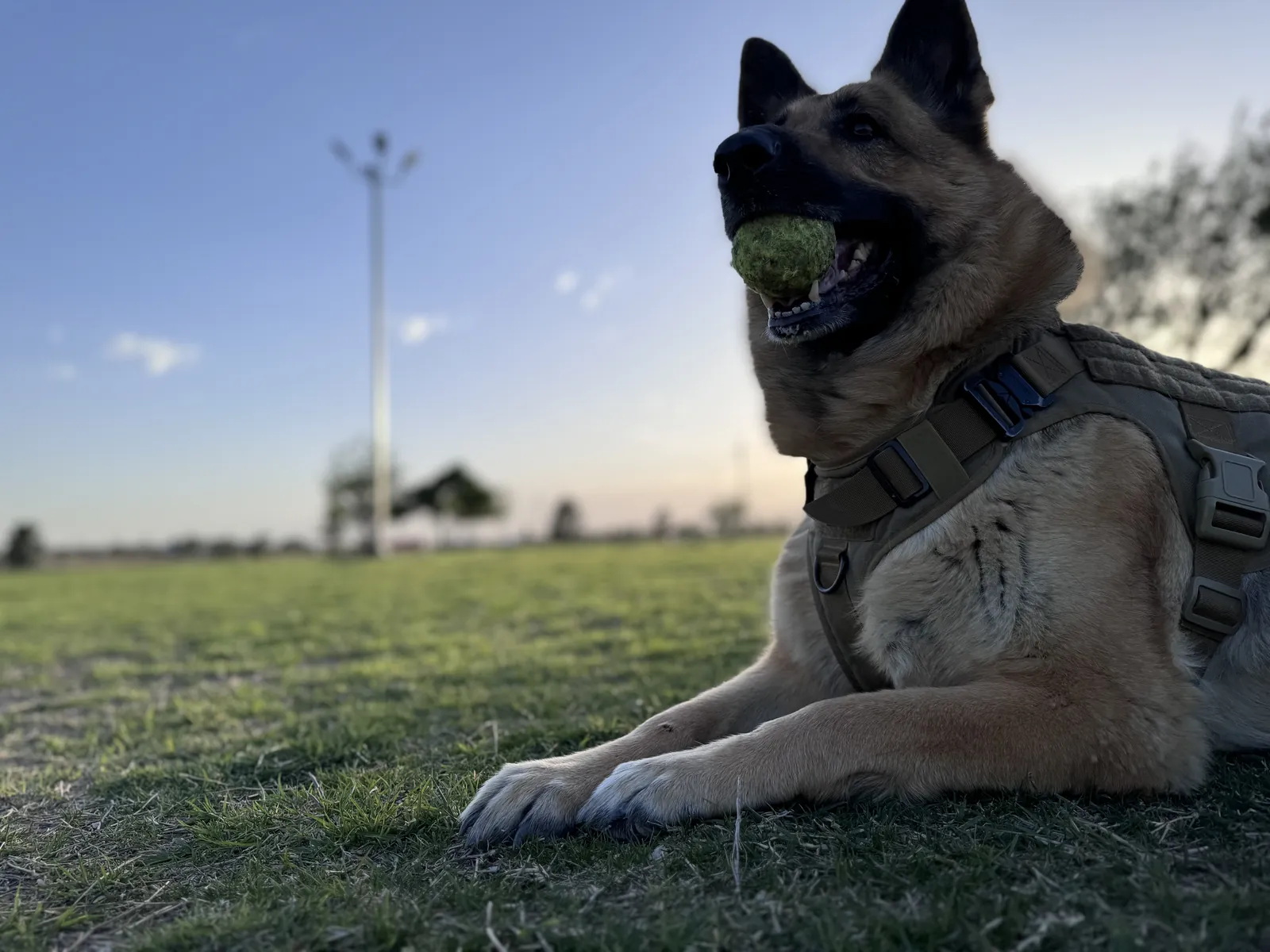
If you want to do something in your dog's name, you can give on Shelby's page and add their name to your message, or start a page of your own. Shelby's page is part of Life After Hemangiosarcoma, a Morris Animal Foundation team of owners who lost dogs to this cancer.
People who will listen
Grief for a dog is real grief. You don't have to explain it to these people.
- Tufts Pet Loss Support Helpline508-839-7966. Volunteers answer Monday to Thursday, 6 to 9 pm Eastern. Leave a voicemail any time and they'll call back on the next shift. You can call before a loss too, if you're facing a decision about euthanasia.
- Cornell Pet Loss Support Hotline607-218-7457. Veterinary student volunteers, trained by grief counselors, answer. Hours change with the seasons, so call for current hours. You can stay anonymous.
- Lap of Love pet loss supportFree pet loss support groups on Zoom, several times a week. There is also a group for people grieving a loss that hasn't happened yet, at $15 a session.
If grief turns into thoughts of hurting yourself, call or text 988, the Suicide and Crisis Lifeline.
Sources
- Cornell Richard P. Riney Canine Health Center. Hemangiosarcoma in dogs. Updated October 2024.
- American College of Veterinary Surgeons. Splenic masses.
- Morris Animal Foundation. New research initiative to address leading cause of canine cancer deaths. October 2022.
- World Small Animal Veterinary Association, Oncology Committee. Pet owner fact sheet: hemangiosarcoma of the spleen of dogs (PDF). 2025.
- Gedney A, et al. Evaluation of the anti-tumour activity of Coriolus versicolor polysaccharopeptide (I'm-Yunity) alone or in combination with doxorubicin for canine splenic hemangiosarcoma. Veterinary and Comparative Oncology, 2022.
- Flory A, et al. Clinical validation of a next-generation sequencing-based multi-cancer early detection "liquid biopsy" blood test in over 1,000 dogs using an independent testing set: the CANcer Detection in Dogs (CANDiD) study. PLOS One, 2022. Funded by PetDx.
- dvm360. New cancer screening test for dogs now available. December 1, 2020.
- Morris Animal Foundation. Hemangiosarcoma Initiative: new findings, new therapies, new hope for dogs. Updated August 26, 2026.
- Wilson C, Holden S, King J, Mallikarjun A, Buis M, Otto CM. Trained dogs can detect the odor of hemangiosarcoma in canine blood samples. The Veterinary Journal, 2026.
- University of Florida College of Veterinary Medicine. Vaccine study for dogs with splenic hemangiosarcoma.
- American Veterinary Medical Association. AVMA Veterinary Clinical Trials Registry.
- Cleveland MJ, Casale S. Incidence of malignancy and outcomes for dogs undergoing splenectomy for incidentally detected nonruptured splenic nodules or masses: 105 cases (2009 to 2013). Journal of the American Veterinary Medical Association, 2016.
- The Canine Review. Petco-backed dog cancer test venture believed to be belly-up. March 8, 2024.
This guide is here because of Shelby. Read her story, or see how you can help Morris Animal Foundation fund hemangiosarcoma research in her name.